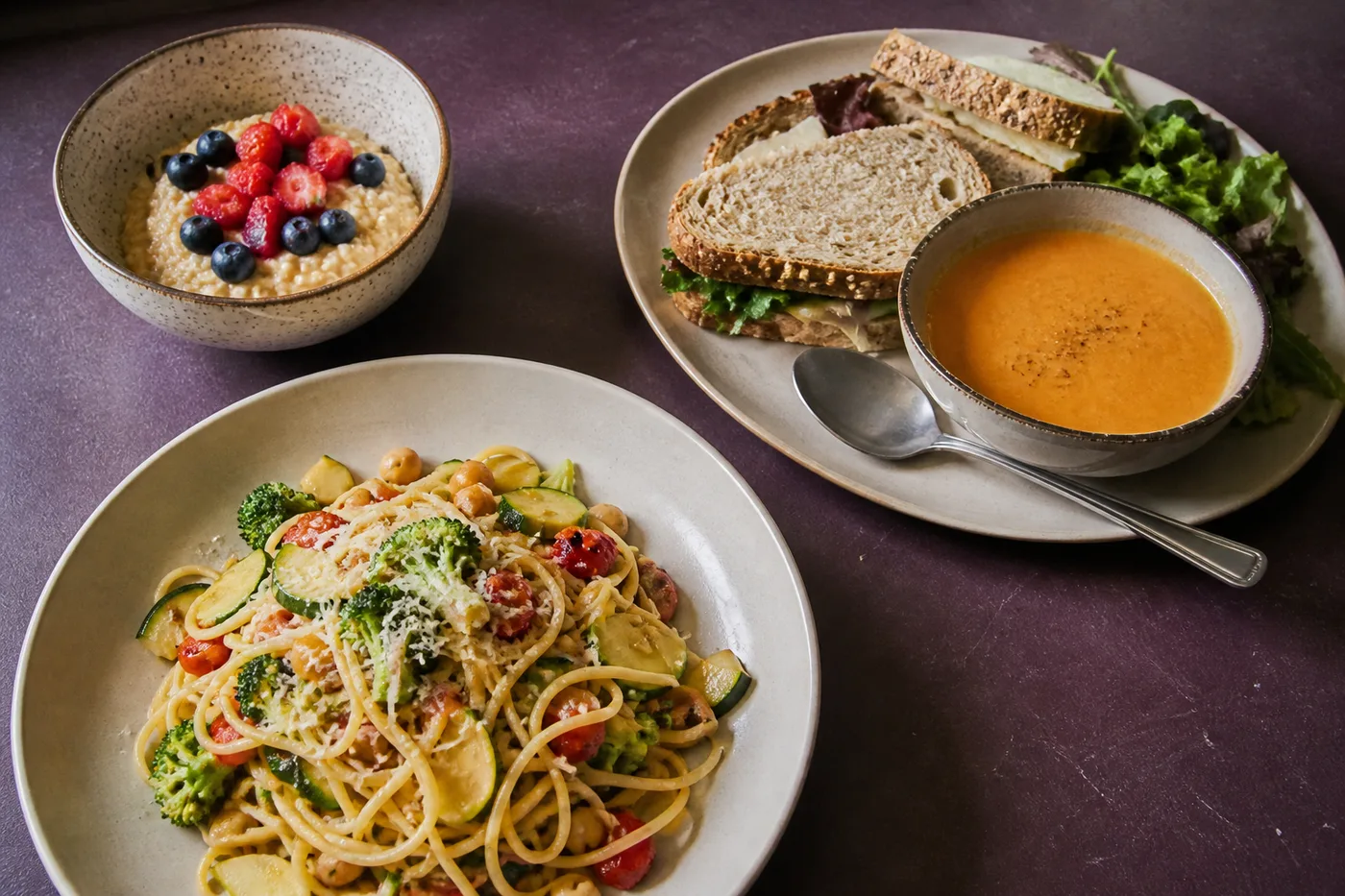
Almost every health article you will read is built on the idea of eating less of something. This one is not, and the difference is the whole point.
Where a cycle has stopped because the body is short of energy, the direction that helps is more food, more regularly, with the carbohydrate and fat left in. Restriction makes the underlying problem worse, however healthy the restricted diet looks from the outside.
Energy availability, in plain terms
Think of it as what is left over. You take in a certain amount of energy from food. Exercise spends some of it. What remains has to cover everything else your body does — repair, immunity, concentration, temperature, and the hormonal work of a menstrual cycle.
When that remainder gets too small, the body prioritises. The cycle is one of the first things it is willing to set aside. It is not malfunctioning; it is making a sensible decision with the information it has.
That remainder can shrink two ways: eating less, or doing more. Often both at once, and usually without anyone deciding to cause a problem.
What a fuelled day tends to look like
Not a meal plan — portions are individual, and a dietitian can help you with yours — but the shape is consistent:
- Breakfast, properly. Within an hour or two of waking, with carbohydrate, protein and fat in it. Not a coffee. Not a piece of fruit on the way out.
- Three meals, plus snacks if you need them. Long gaps are where the deficit quietly opens up.
- Carbohydrate at every meal. Bread, oats, rice, pasta, potatoes. Carbohydrate availability is closely tied to the hormonal signalling behind the cycle, and it is usually the first thing people cut.
- Food around training, not just after it. Something before a session, and something afterwards.
- Fat on the plate. Oils, nuts, seeds, dairy, oily fish, eggs. Hormone production needs it.
Signs the total is not enough
None of these is proof, and all of them are worth mentioning at your appointment: feeling cold all the time, poor sleep, low mood or irritability, injuries that keep recurring, constipation, hair thinning, constant preoccupation with food, and training that keeps getting harder rather than easier.
Adding, not swapping
The instinct when told to “eat better” is to trade one food for another. That is not the task here. If energy availability is the issue, the total is what matters, and swapping keeps it the same.
So: add a breakfast. Add a snack. Put the potatoes back. Have the second helping. It can feel strange after a long period of eating carefully, and that feeling is worth naming to someone who can help.
When to get more help than an article
If eating more feels frightening, or if exercise feels compulsory rather than chosen, that is common, treatable and worth taking seriously now rather than later. Your GP can refer you, and Beat offers free, confidential support in the UK.
Changing how you eat will also not help if the cause turns out to be something else entirely. Get the diagnosis, then make the change.
General education, not a diagnosis. If your periods have stopped, your GP is the next step.
Explore the guides